When Democracy’s Watchdogs Need Watching
Prof. Hagai Boas | 28.12.2025 | Photo: Amos Gil, Shatil Stock

At the mass ultra-Orthodox protest against the military draft law held in late October 2025, widely dubbed the “March of the Million”, one image stood out above all others. Channel 12 reporter Inbar Twizer was seen walking near Jerusalem’s Bridge of Strings, her face turned toward the camera, as a crowd of mostly ultra-Orthodox teenagers surged behind her. They hurled various objects, including water bottles and bits of trash, and shouted curses at her, at Channel 12 – a mainstream Israeli news channel – and at the media at large.
This was no isolated incident. Violence against journalists has been rising steadily in recent years. Media outlets have become politically marked; reporters are increasingly identified with their networks’ perceived political leanings and attacked accordingly at demonstrations. The harassment of another Channel 12 journalist, Guy Peleg, who was threatened and physically obstructed from entering his car by right-wing activist Mordechai David is another example of this troubling trend. In neither Twizer’s nor Peleg’s case did the police appear to take any meaningful action. This leaves the question: who will protect journalists?
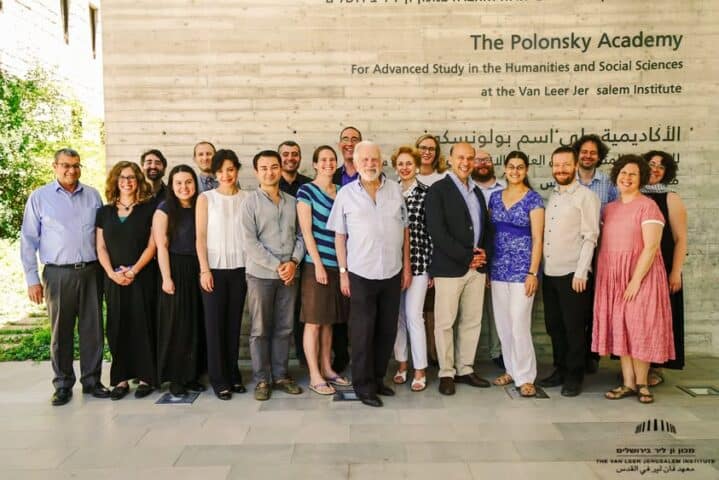
The Israeli Free Press Index, a report published by the Van Leer Jerusalem Institute in collaboration with The Seventh Eye and the Open University of Israel, details the forms of violence Israeli journalists face, starting with the most common: physical assault, verbal abuse, obstruction of reporting, damage to media equipment, and personal harm. The report also reveals that the police are not only failing to prevent such violence; they are, in fact, the second most frequent perpetrators of it.
In 2024, violent incidents involving police officers and journalists included, ranked by frequency: physical assault, obstruction or prevention of coverage, ignoring violent incidents, detaining journalists while they were working, arrests, damage to personal equipment, and unlawful phone searches conducted without consent. The conclusion is unavoidable — for journalists, the police represent a risk factor.
This pattern is not unique to Israel. Around the world, violence against journalists is common, especially in countries with pseudo-authoritarian or populist rule. The growing hostility toward the press in Israel can also be understood in this context. Israeli society is becoming less and less tolerant of a free press. The politicization of media outlets has rendered them targets for government-affiliated attacks.
The report documents a rise in coalition-sponsored legislative initiatives aimed at restricting journalistic freedom. Chief among these is Communications Minister Shlomo Karhi’s sweeping reform plan, which eclipses all others in scope and intent. Coupled with efforts to advance the judicial overhaul, these trends place Israel’s liberal democracy under direct assault.
The physical attacks, harassment, and aggression toward journalists are only the visible front of this broader assault. The less visible, yet equally dangerous, front comprises the legal and regulatory moves designed to constrain the press. Together, they threaten to suffocate Israel’s journalism. The report’s title, On the Brink, captures this peril with striking precision. The press has long been called the “watchdog of democracy”. Yet today, it seems the press itself is in dire need of a watchdog.
Then there is the matter of the third, more familiar threat to the media: concentration of ownership and the notorious nexus of money and media. In Israel’s tangled web of cross-ownership, the same magnate names resurface repeatedly: the Mozes family, Eli Azur, and the Wertheim family, among others — each holding stakes in both major media outlets and extensive commercial enterprises. The report maps this web and highlights its principal power brokers.
In light of this reality, the importance of an independent public broadcaster becomes all the more vital. Public broadcasting, funded by the state, is meant to uphold values beyond profit margins. It should not fear investigating the wealthy and powerful, and it bears a responsibility to air content that does not necessarily cater to the lowest common denominator. It was in this context that Minister Miri Regev asked, during discussions about the future of Israel’s public broadcasting corporation, “But what good is public broadcasting if we can’t control it?” Simply put, governmental actors who do not subscribe to the liberal principle of independent public media tend to view broadcasting as a tool for their own ends. Populist worldviews, which claim to embody the “will of the people”, generally reject any form of autonomy that challenges that claim.
Like other nations, Israel is undergoing a process of democratic backsliding. Institutions that form the backbone of liberal democracy face relentless assaults. The judicial overhaul triggered mass protests in 2023, drawing hundreds of thousands, perhaps millions, into the streets. Now, the attack on another cornerstone institution, the free press, is well underway. The 2024 Israeli Free Press Index lays out in detail the scope and depth of this offensive. These trends have not subsided in 2025; if anything, they seem to be intensifying and appear destined to continue as Israel enters its election year in 2026.