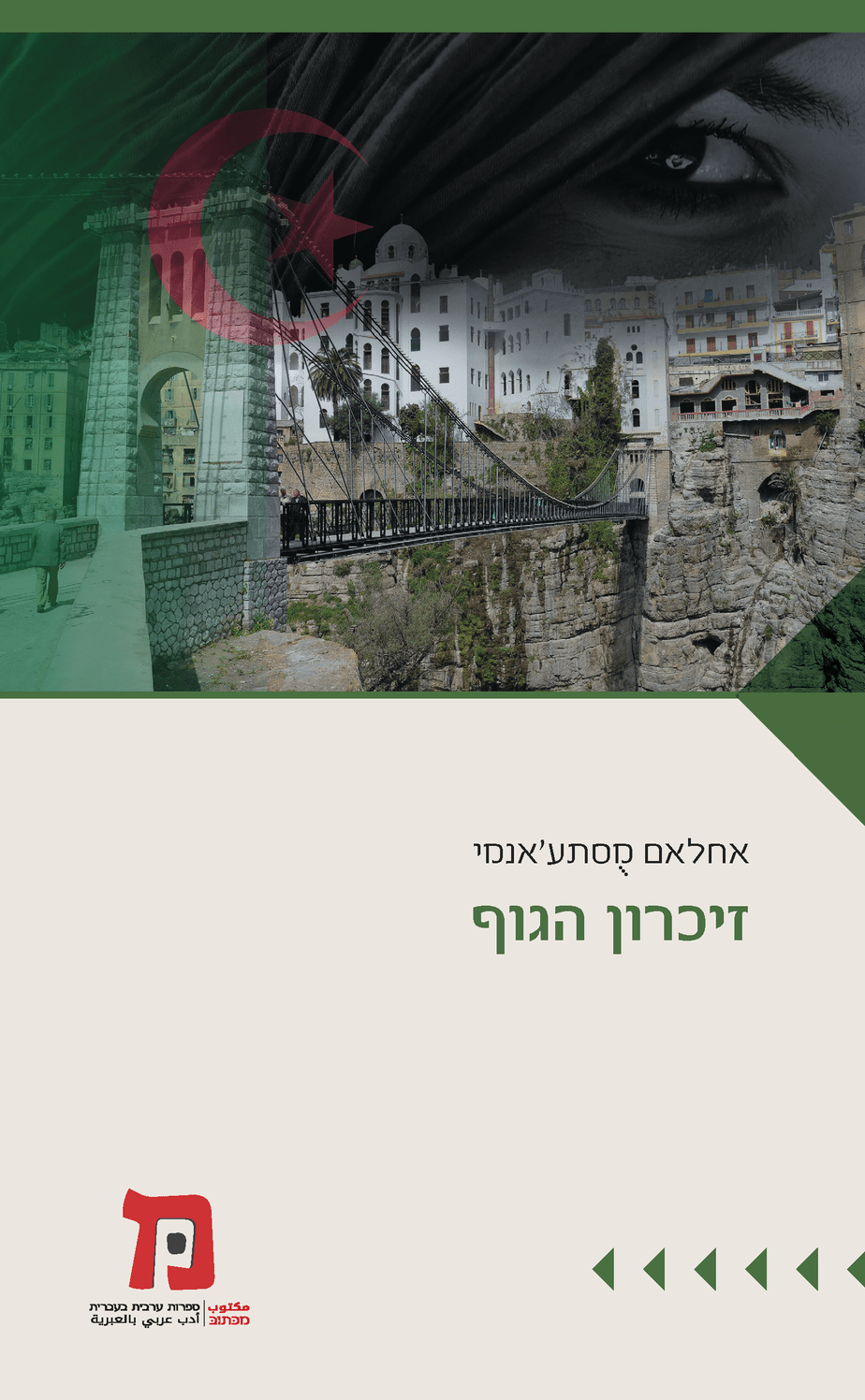
The Bridges of Constantine
Ahlam Mosteghanemi
“The doctor’s voice, in his fractured French, woke me again. ‘Paint!’ Again and again I saw his white-cloaked figure, parting from me and shaking my hand. ‘Paint!’ ”
That was the Doctor's advice to Khaled—a fighter who had lost his left arm in Algeria’s war of independence—for escaping from his deep depression. Dozens of years later, Khaled launches his first exhibition in a gallery in Paris, at which he meets Ahlam, the young writer who falls in love with him although, given their age difference, he could be her father. Khaled, the narrator, is the creature of the imagination of Ahlam the writer, who becomes the conduit for his voice and relates the novel in the masculine gender. The language of painting as redemption for one whose arm has been cut off paves the way for the mother tongue of one whose language has been subjugated.
Ahlam Mosteghanemi is the first Algerian woman writer to publish a novel in Arabic after the liberation from French colonialism. As one of the judges who granted her the Nagib Mahfouz Literary Prize said, “This is the light of morning after a long darkness. The novel succeeds in escaping from the linguistic exile that French colonialism imposed on Algerian intellectuals.”
Ahlam Mosteghanemi (b. 1953) is a novelist and poet, the daughter of an Algerian underground fighter who was incarcerated in a French prison. She spent her childhood in Tunisia and returned to her homeland after its liberation. Her books have been translated into many languages and have sold millions of copies. The Bridges of Constantine, which appeared in 1993 and has gone through 34 editions, is the first part of a trilogy. The second is Chaos of the Senses (1997) and the third is The Dust of Promises (2003). In 2016 she was named the UNESCO artist for peace.