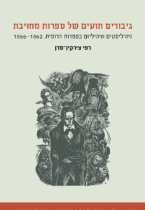
Wandering Heroes, Committed Writers
Nihilists and Nihilism in Russian Literature, 1862-1866
Rafi Tsirkin-Sadan
Wandering Heroes, Committed Writers: Nihilists and Nihilism in Russian Literature, 1862–1866 offers a comprehensive look at the literary, philosophical, and social discourse in Russia in the 1860s. In those years, nihilism and nihilists constituted the main literary and social issue that concerned novelists, literary critics, and readers in Russia. The concept of nihilism, and its origins in German philosophy, became a synonym for radical skepticism and the perplexity of metaphysics. As nihilism spread in Russia it gave birth to a new sub-genre of the European novel: the nihilist novel at whose core is a young protagonist who rejects the conventional views in all aspects of life, including religion, science, politics, and art. These literary characters—such as Bazarov in Fathers and Sons by Ivan S. Turgenev, the protagonists of What Is to Be Done? By Nikolai G. Chernishevsky, and Raskolnikov in Crime and Punishment by Fyodor M. Dostoevsky—rapidly became cultural icons. Through the mediation of literary criticism, nihilism spread from literature to historical reality and even had a decisive influence on the disintegration of the social and political systems. Nihilism in Russian literature is, therefore, not only a subject for literary scholarship, but also for research on the intellectual and cultural history of Russia.
Dr. Rafi Tsirkin-Sadan is a fellow of the Israeli Inter-University Academic Partnership in Russian and East European Studies and of Da’at Makom—an Israeli Center of Research Excellence (I-CORE) for the Study of Cultures of Place in Jewish Modernity. His book Jewish Letters in the Pushkin Library: Y. H. Brenner’s Work and Its Connection to Russian Literature and Thought [in Hebrew] was published in 2013 by the Bialik Institute.