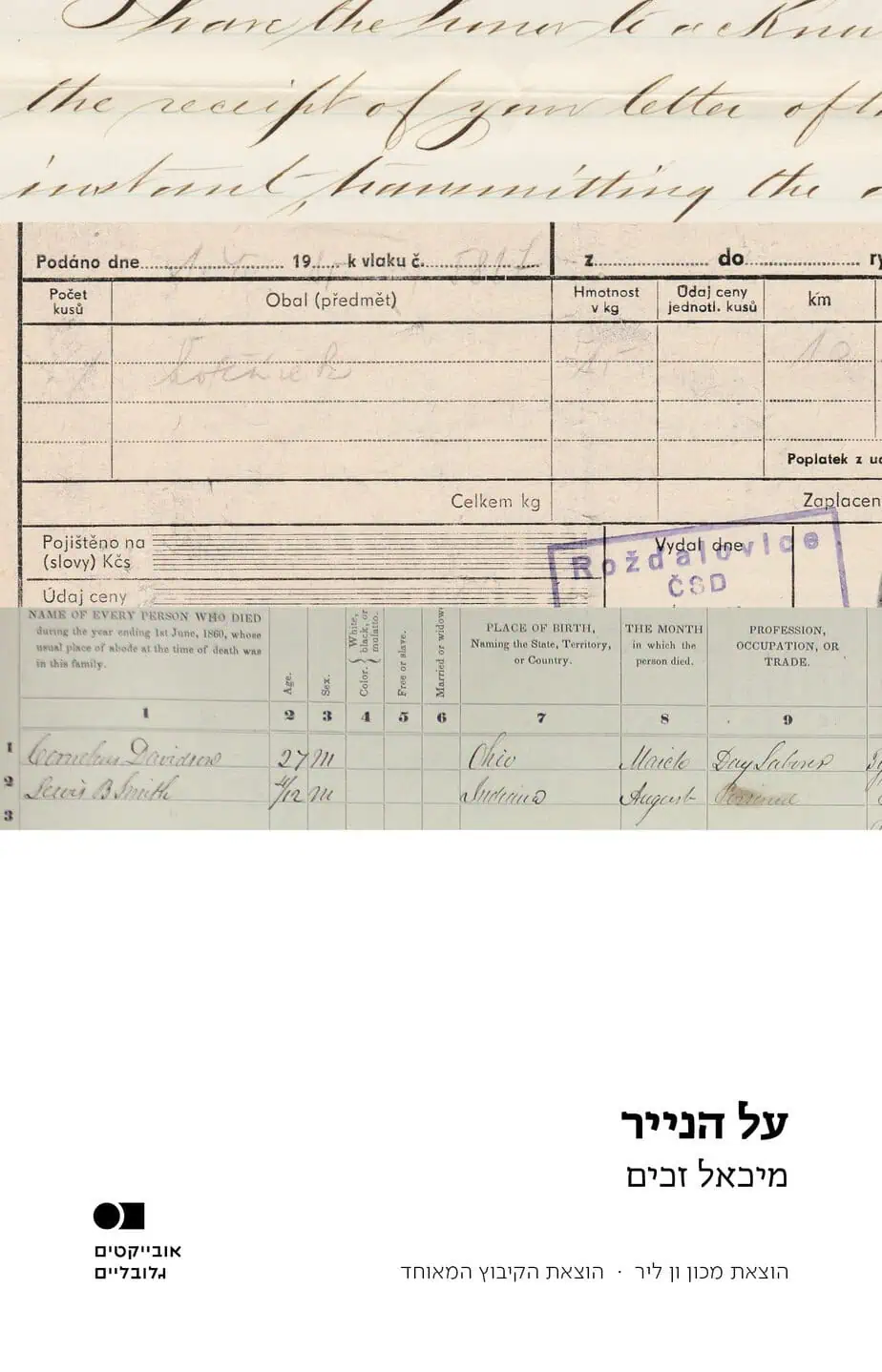
On Paper
Michael Zakim
The history of paper is inseparable from the history of the world. Comprised of plant fibers initially shredded and then reconstituted so as to best suit the workings of pen and printing press, paper appears to be a simple object of straightforward utility. In fact, having proven vastly more effective than the stone and clay tablets, parchments, and papyrus which it replaced as the repository of human knowledge, paper has accompanied, if not, in fact, powered the forward march of civilization over the past two millenia. As such, common clichés that dismiss “scraps of paper” or belittle “paper tigers” as generally void of practical significance obscure the very critical role paper plays in our lives. Indeed, only on paper – until very recently, at least – was it possible to formulate plans and transform those plans into action.
On Paper explores this phenomenology as it developed in two principal spheres of social life in the modern age: the invention of a capitalist economy and a national polity. The drama unfolds in the counting houses organized throughout the United States over the course of the nineteenth, that is, the industrial century in order to manage – in fact, to produce – the market, and in the offices of the British colonial administration operating during those same years in London and south Asia in administering – in fact, producing – a nation-state in India. This close reading of the small print of modern governance, which exercised power by means of pen and ink, preprinted forms, official correspondence, and statistical tables—among other protocols of paperwork—reveals just how much the real world rests on paper foundations.
Does the hyper-reality of data symbols filling the electronic screen herald the end of such a history of paper? The question is addressed in the concluding chapter of On Paper, which explores the significance of our continued use of “pages,” “files,” folders,” and even “libraries” in order to gauge the power of a paper epistemology in our digitizing age.
Prof. Michael Zakim teaches history at Tel Aviv University. His scholarly interests include the making of the modern economy, the sociology of knowledge, gender and sexuality, political philosophy, machine culture, and the history of male fashion.