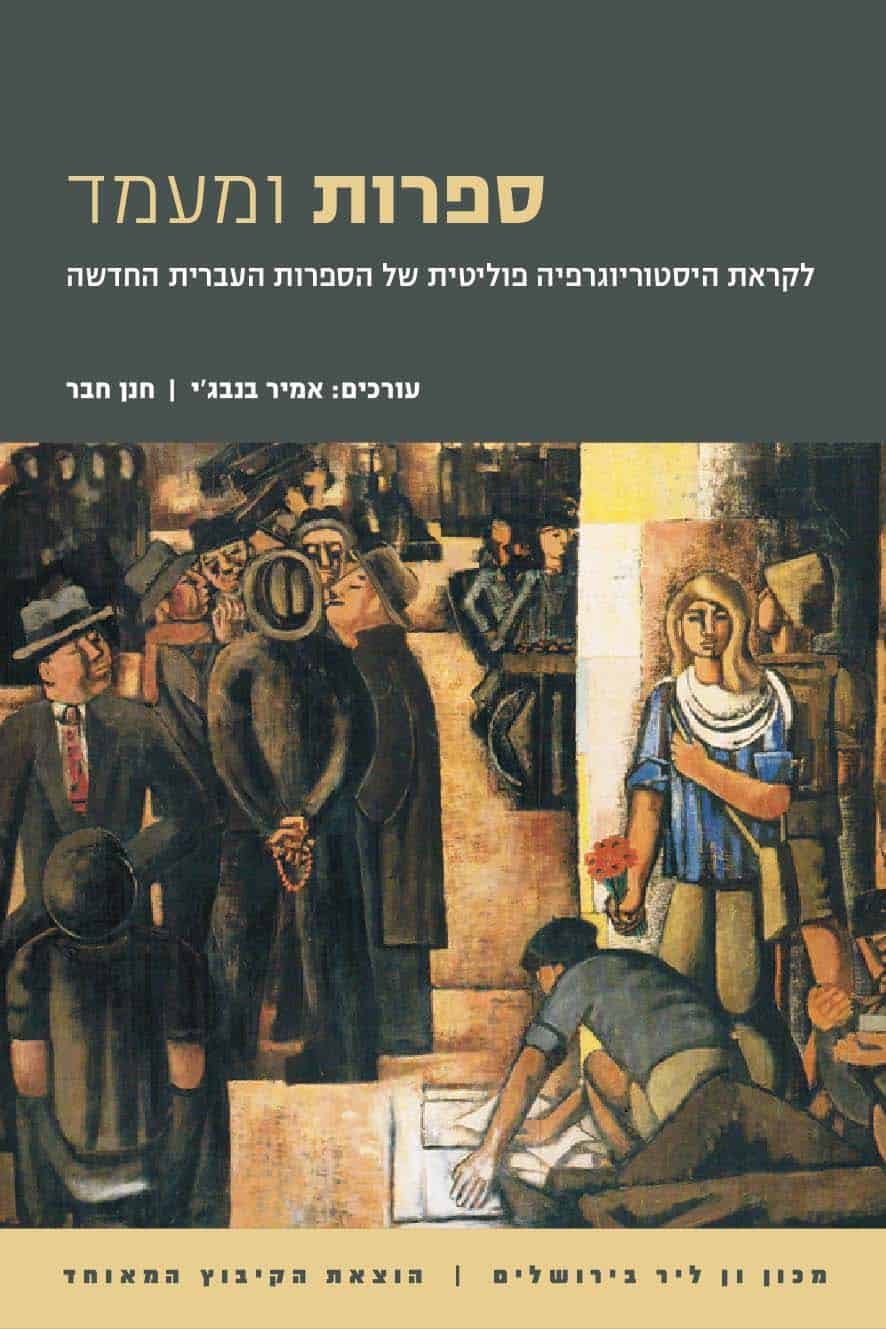
Literature and Class
Towards a Political Historiography of Modern Hebrew Literature
Literature and Class: Towards a Political Historiography of Modern Hebrew Literature presents a new historical understanding of all the political and cultural interventions made in the name of Hebrew literature from the end of the nineteenth century to the present. The book challenges the conventional linkage of the political and critical nature” of modern Hebrew literature with concepts originating in Enlightenment and Haskalah thought. Instead, it shows that this literature’s power of political opposition lies in the divisive force of class consciousness, ethnic conflicts, and gender and religious gaps.
From the emergence of “the Jewish observer” in the writings of the maskil Isaac Erter in the beginning of the nineteenth century to the “mobilized poetry” of David Avidan at the end of the twentieth, the political bite of Hebrew poetry has been seen as drawing its power and authority from reason. As Avidan put it, in writing poetry the mobilized poet performs an act that is “artistically political, cosmic” that it is always a “universal act.” Critics and scholars of Hebrew literature, too, have tended to think that literary intervention in life was based on reason—of the critical individual—or on the insights derived from the aesthetic experience. The articles in this book seek to create a different historiography. They show that the political nature of Hebrew literature can be described in terms that are no longer dependent on abstract norms and values, such as the human being, the truth, or the nation. Hebrew literature, which has long since lost its status as a unifying force, is no longer a literature of harmony and unity, and it does not pretend to offer social or spiritual healing in the name of a common cultural ideal. By collectively spreading a broad net that catches divisions, interventions, and oppositions, the book’s articles help achieve a new definition of the concept of literary politicalness and offer a new description of the political paths that Hebrew literature has taken in the twentieth century.