One of the Few Israelis With a Direct Line to Gazans Urges the Public to Confront 'Extreme' Horrors
Nir Hasson | 07.01.2026 | Photo: Yousef Masoud, Pixabay
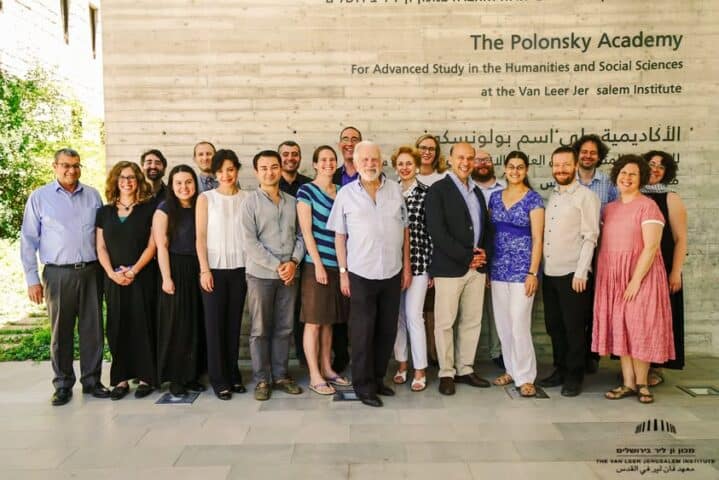
This article, originally published in Haaretz features Dr. Assaf David, Director of the Israel in the Middle East research cluster at the Van Leer Jerusalem Institute and co-founder of the Forum for Regional Thinking. Dr. David’s work focuses on regional political processes and on making Arabic-language discourse accessible to Hebrew-speaking audiences. In recognition of his contribution to advancing human rights and amplifying marginalized voices in public debate, he was recently awarded the Emil Grunzweig Human Rights Award.
07.08.2025, Haaretz
Middle East scholar Assaf David, one of the few Israelis in direct contact with Gaza residents, wants his fellow citizens to recognize the horrors unfolding there in their name. He relays chilling accounts from Gazans, describes their hatred of Hamas and warns that 'Jewish jihad' has seized control of Israel
On July 19, Assaf David had the feeling that something terrible was happening in the Gaza Strip, even in terms of the already-emerging disaster there.
"People with no connection between them wrote to me in private messages or on Facebook: 'I can't walk,' 'I've felt dizzy since the morning,' 'Something has happened to my eyesight.' Suddenly there were reports that dozens of people were arriving at emergency medical centers for treatment with symptoms of exhaustion. So I realized that something truly extreme had happened."
Dr. David, a Middle East scholar, is one of the few Israelis who are in direct, unmediated contact with inhabitants of the Gaza Strip; in recent months he has been documenting and conveying the horrors of the war to the Israeli public via social media and conversations.
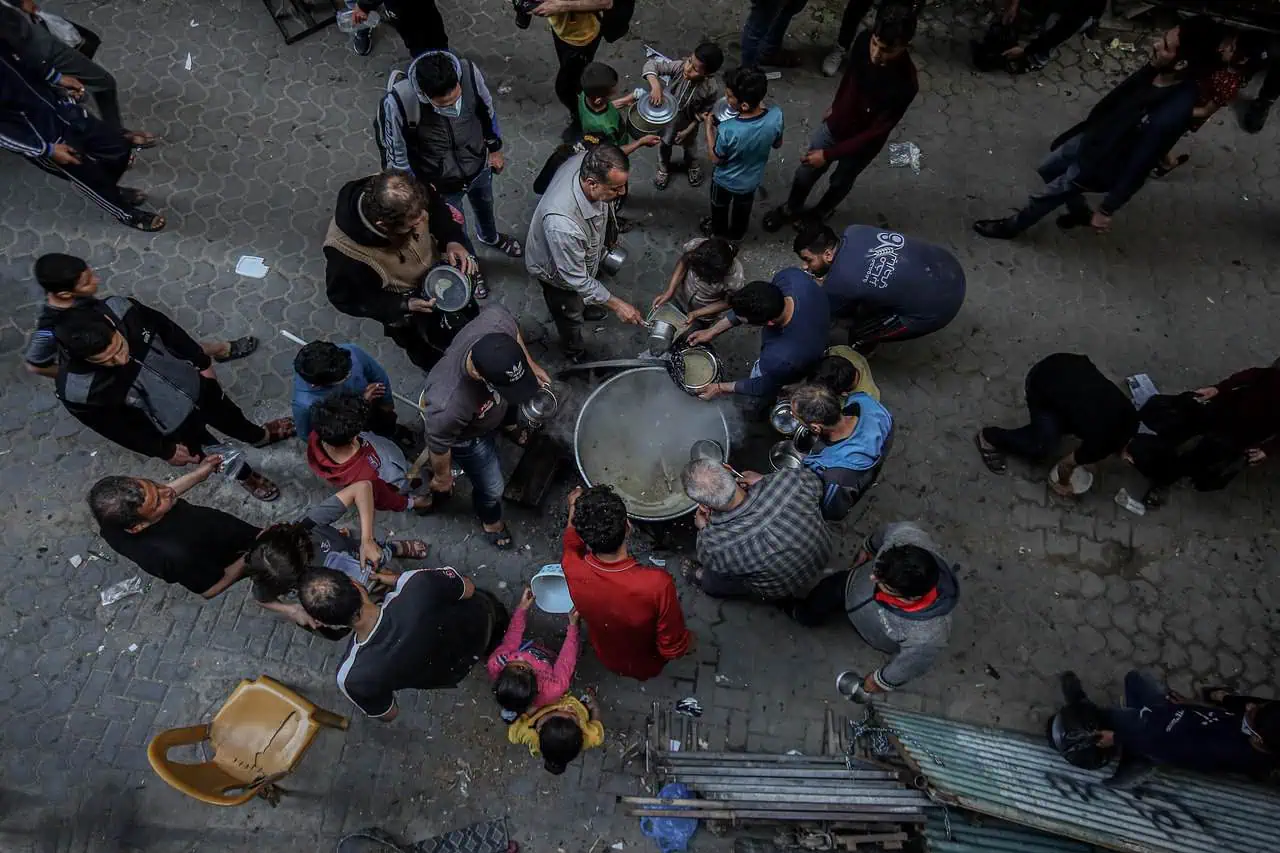
In a Facebook post that day, three weeks ago, issued a warning about what he was seeing: "a frightening leap in public reports and personal messages from Gaza about a rapid worsening of the starvation epidemic. People from across the Strip are writing about dizziness, fainting, vomiting. Hundreds are crowding the clinics that are still functioning. Children are losing consciousness."
"Today my family and I have not eaten a thing," an acquaintance from the Strip wrote him. "We have nothing to eat – absolutely nothing is left, in the fullest sense of the word!" another reported.
The following day, the Hamas-run Gaza Health Ministry published an announcement about the unfolding wave of deaths, which had claimed the lives of 18 people within a 24-hour period. Dozens have since perished of hunger.
"Since that day I've been truly depressed," David tells Haaretz. "Because I'm afraid we've reached the point of no return that experts warned about many months ago, after which nothing can be done. What that means is that if you've reached a certain level of malnutrition, even flooding the place with humanitarian aid won't help. There will still be a great many who will suffer irreversible damage, and death will become a mass phenomenon. Regular aid will no longer help – what's needed is emergency medical assistance.
"In the end," he adds, "the emotions overcome you. When they are in despair, you are in despair; when they see no future, you see no future. When they count down the minutes to their death, you count down the minutes to your death. It's horrific."
David is co-founder and academic director of the Forum for Regional Thinking and director of the Israel in the Middle East unit at the Van Leer Jerusalem Institute, a veteran think tank. For most of his professional life he has researched and developed future scenarios for the Israeli-Palestinian conflict – specializing in political processes and relations between Israel, the Palestinians and the greater Arab world.
But in recent months he has felt that such an occupation is a privilege to which he and other Israelis are no longer entitled. He has regularly begun to post Hebrew translations of the dire messages he receives from residents of the Strip, on Facebook.
"What must be done is to put an immediate stop to what is happening in Gaza," he stresses. "Because every day that passes – every day we're in Gaza – is a day that's erased from our future, not only from the future of the Palestinians. Every day involves the peeling off of yet another layer of our humanity. We are left in a jihadist, traumatic, vengeful situation."
Nothing in Assaf David's biography would seem to have led him to be the person he is today. He grew up in a religious Zionist home in the urban settlement of Kiryat Arba, abutting Hebron, served in the army for 11 years, was seriously wounded in one of Hamas' first suicide attacks, and for years served as an adviser for the Prime Minister's Office and for civil society organizations.
"I'm well known in the establishment," he says. "They probably think I've freaked out over the years." At 51, he sees himself as "one of the so-called children of the winter of '73" – referring to the Yom Kippur War in October that year.
David's father arrived in Israel from Yemen as an infant; his mother was born in Israel to an immigrant family from Yemen. His maternal grandfather was a member of Menachem Begin's pre-state Irgun underground and was imprisoned by British Mandatory authorities in Cyprus.
"I knew [Baruch] Goldstein, my father was a patient of his," he says, recalling his childhood in Kiryat Arba in the 1970s and '80s, and referring to one of its residents: the American-born physician who in 1994 murdered 29 Muslim worshippers in the Tomb of the Patriarchs in Hebron. Itamar Ben-Gvir [the current national security minister and an admirer of Goldstein] was younger than me, but there were already stories about him."
After attending a high-school yeshiva in the settlement of Efrat outside Jerusalem, David was drafted into the elite Israel Defense Forces 8200 intelligence and cyber unit. "It was right after the Gulf War and there was a shortage of draftees who had studied Arabic, so they also took those who didn't have serious knowledge of the language."
In August 1995, exactly 30 years ago, when he was in the first year of his career army service, David was on the No. 9 bus in Jerusalem. The bus stopped at an intersection in Ramat Eshkol, a post-1967 neighborhood north of the city, next to a No. 26 bus. A Hamas suicide bomber on the latter bus self-detonated. One person was killed on the spot and a number of others were wounded in the blast. One of them, a tourist from Switzerland, was critically hurt and died after being comatose for some years. David, just meters away from the terrorist, on the other bus, was seriously wounded: He lost his left eye, suffered an injury to his arm and his whole body was riddled with shrapnel. After a period of rehabilitation he returned to the army for eight more years.
Following his military service he majored in Middle Eastern Studies at the Hebrew University of Jerusalem, and concurrently acted as an adviser to the Economic Cooperation Foundation, a nonprofit think tank promoting ties between Israel, the Palestinians and the Arab world, which was established by aides of former Prime Minister Shimon Peres: Yossi Beilin, Yair Hirschfeld and Ron Pundak.
"It was my first encounter with the Zionist left," he recalls. "Where I came from they were considered to be 'Oslo criminals.' I remember sitting with them in all kinds of meetings, mainly in Jordan, listening and thinking, 'Wow, these guys are real Zionists, like, they're really looking after the country. Suddenly I saw that those among them who were generals were talking like generals, and those who were diplomats were talking like diplomats, and they weren't patsies. They were representing Israel's interests very well. But gradually I also saw the flaws in leftists of this type. There were no Mizrahim [Jews of Middle Eastern origin] and no Arabs among them, and no one there knew Arabic at all.
"There was a lot of English, and etiquette seemed to be more important than a deep knowledge of the grassroots," he adds. "It really bothered me that they were recruiting people from 'money fields' who attended Princeton and not people who majored in the Middle East in universities."
The subject of David's doctoral thesis was army-civil society relations in Jordan. He was given rare access to documents and other sources in the Jordanian administration such as no Israeli scholar before or after him has enjoyed. "It was a window of opportunity," he relates. "I succeeded in going through all the records of the Jordanian government – tens of thousands of pages. I wrote about how the status of the Jordanian army had changed from a fighting body to a professional and bureaucratic body."
For 14 years, he consulted both in the private sector and in the Prime Minister's Office on matters relating to Arabic, radical Islam and relations in the Middle East. In time, though, he found himself drifting away from the one-sided stance promoted by the military-security establishment. That move was actually precipitated, originally, by the terrorist attack in which he was wounded.
David: "I remember that it was important for me to understand: Why would a person do that? With time, as I immersed myself more in the Israeli-Palestinian story and saw all the hidden keys of the conflict – the establishment of the Jewish state while negating Palestinian freedom since 1948, the balance of power and the willing blindness – I became more and more critical, and it was hard for me to be part of the system, so I decided to leave it. That was actually convenient for both sides, as it happens."
In the days after October 7, David says he experienced a twofold crisis. He was stunned not only by the Hamas massacre itself, but also by the responses to it of some of his Palestinian colleagues.
"I was in a WhatsApp group where I was the only Jew," he says. "The skepticism and the way doubt was cast on what had happened drove me crazy. They wrote a lot, and I didn't reply, and then someone wrote: 'There's no chance Israel will invade on the ground.' At that moment I exploded. 'You're all totally clueless!' I wrote. 'You don't understand the shock all Israelis are in or the scale of the blow Gaza is in for. No one will be able to stop it.' I admit that I sort of enjoyed telling them that; it was like poison that came out of me.
"And then someone wrote: 'How can you talk like that?' I replied to her: 'Do you [plural] understand what has happened here? There were acts of rape, cold-blooded murder of women and children, hundreds of people killed.' And then a lawyer who worked for the Palestinian Authority wrote me that she didn't believe it and that there were no testimonies.
"'Listen,' I told her. 'I didn't dare watch the video footage, but if you want to, please, I'll get it for you.' I sent her links to clips and didn't hear a word back from her. I asked her privately the next day if she had watched them and she began to say, 'This one looks fabricated and that one seems to have been processed.' The very same kind of denial that we Israelis excelled in afterward."
It's actually in the denial of the atrocities by both sides that David finds a small ray of light. "You deny something because you are incapable of believing that your side will do things like that. This is exactly the boundary line between the Muslim Brotherhood and ISIS. The Salafi jihad boasts of crimes of this sort. From the outset they are permissible and desirable.
"But the ideological stream of the Muslim Brotherhood, with which Hamas is affiliated, doesn't see these deeds as heroic, but as acts that must be obscured and hidden – or explained as being committed in the heat of battle. When you deny something, you are at least purporting to be a human being. Saleh al-Arouri [the Hamas leader assassinated by Israel in January 2024] said that on October 7 things happened that should not have happened, because the whole Gaza Division [of the IDF] had collapsed in a second, the bases and communities were wide open and civilians who were not affiliated Hamas entered them.
"We know that this isn't true, and that people in armed Hamas militias also committed acts like that. But the very use of this rationale wasn't intended only to play the hasbara [PR] game vis-à-vis the world or vis-à-vis Israel. There is a certain standard of fair combat that you want to abide by. Accordingly, I find something encouraging in the [Arouri] denial, in the sense that, when you deny, you are saying that there's no way I did anything like that."
As the war progressed, David began to dive more deeply into social media in Gaza. "People there post things all the time," he explains. "Someone wrote me not long ago, 'I can't stand up anymore. I am totally dizzy, my legs can't carry me any longer, but there is internet. So I am writing. I can still write.' So I started to translate posts from all kinds of people. Some contacted me privately and told me things, sometimes during long conversations."
One of the main messages that comes through, he says, is the intensity of Gazans' loathing of Hamas. "The web is simply exploding with it. There are endless numbers of posts, both from people with few followers and from people with tens of thousands of followers. Messages [to Hamas] like: 'Go away, all of you – you've ruined everything that can be ruined.' Or, 'You'll find no way out of all this.'
"People write Hamas: 'Once you said you would liberate Al-Aqsa [the mosque in Jerusalem], you will liberate the 1948 borders, and now you're arguing about the Morag Corridor [in southern Gaza]. What are you even talking about? Leave us alone!' There are multiple calls to release the hostages unconditionally. I also don't remember when I saw [even] a tiny bit of a message from Gaza justifying the massacre in the past few months. That is a super-normal reaction. If, heaven forbid, Israel looked like Gaza, here too 95 percent of Israelis would hope for the demise of the regime."
The hatred for Hamas in the Strip may be real and deep-seated, but according to David, Gazans simply don't have the strength to bring about the release of the hostages or an end to the war. "I urge Israelis who imagine that Gazans could do this, to look at ourselves. We are living under a regime with 10 percent of the oppression that exists in Gaza. I can still speak with you and you can write what I say in the paper, and I won't be killed.
"As Jews we still have not experienced the terror of prison and we haven't done anything to get rid of our regime. What did we expect them [the Gazans] to do when every word of theirs can get them into trouble?"
Two weeks ago, David wrote in a post: "The ability of a starved, wounded Gazan, bereaved of a father or mother or brothers and sisters or all of them together, who is sick, barely surviving, to force Hamas to hear the outcry of the Strip's inhabitants, is a million times lower than your ability – you, as a Jewish Israeli reader, sated and browsing Facebook for your pleasure, before or during or after summer vacation – to force your government to stop the flagrant corruption and the regime coup, to implement equality of the burden [of serving in the army], to bring back the hostages, to eradicate [personal] and national crime, to curb the army's deterioration into militias, and in general to be a reasonable government and not a regime that's part of the axis of evil. [That Gazan has] zero ability. A big round zero ability."
"About noontime I lost my son. I didn't find him in the tent camp. I asked his friends; they told me that maybe he went to Zikim [a food distribution site] to get some flour. I was crazed with worry. I started running with all my might to look for him and bring him back from the death trap.
"What I saw on the way was heartbreaking, enough to drive you insane. Dozens of dead and wounded lying on the road. People passing them as though they were obstacles. I forgot why I came. I started to load bodies onto a sheet of tin and dragged them to a safe spot nearby. I asked for help, but to my astonishment very few came to my aid. I became very tired.
"Suddenly I remembered that I had gone to look for my son. I shouted with all my might, among the masses of people. Finally I despaired and decided to go back. What I saw on the way back was even more horrible than what I saw on the way there. The four bodies I'd dragged away were still next to the demolished building but people had brought over more bodies and wounded people – most of whom were young and in the prime of life.
"I laid one of them on a large piece of cloth and carried him, with the help of another person. We brought him to a road where there are means of transportation. When I got back, I got a call saying that my son had returned to the tent. He hadn't gone to Zikim but to visit a wounded friend. God's curse on those who brought us to this situation."
– From a July 31 post by Ramzi Taysir, which David translated (into Hebrew) and published
Perusing Gaza's social media has brought David face to face with the abysses of human suffering the Strip is enduring. "I read and translate testimonies of people who walk 7 kilometers each way in order lug a sack of flour weighing 30 kilos [66 pounds] in this horrific heat. How can we even imagine that? The extreme heat is also playing a part.
"It's terribly frightening because every time, you feel as if you've crossed another threshold from which it's already impossible to return. For example, the erasure of Gaza – there is no way back from that. What that means is, that even if the last soldier returns to Israel today and the Gaza Strip is opened to the world, we're in a situation in which there is no way to exist in Gaza."
A few months ago, he says, "I wrote an email to a few people saying that I see the Gazans becoming Muselmanns [a term used to describe emaciated and dying prisoners in World War II concentration camps]. One of them replied that this was a very harsh word. I responded that I am not a Holocaust scholar, but I think that this is what people in Nazi death camps looked like – this is how they functioned.
"You can clearly see the loss of humanity in Gaza. It comes through even in the coherence of texts they write, in words, in feelings that arise from the texts. A year and a half ago, I saw people still talking in terms of, 'If Hamas will do this and Israel will do that ...' – but suddenly it's all descending to the level of how I can survive each day. They have stopped talking like people who have a future.
"Every day that passes they see more scenes of horror, decimated organs. There are stories about entire families being wiped out. Or about your daughter – you suddenly don't know where she is, because she was in the house and the house collapsed. And you don't know if someone got her out. So you live like that for months, now knowing where your child is.
"There are also stories that aren't mentioned in conventional or social media so much. Think what happens to a conservative society that has totally fallen apart like this. For example, a girl who, along with her little brother, are the only remaining members of their family and they have to somehow manage. Then some man comes along and 'takes her as his wife.' Or reports of little kids who are wandering about, scrounging and selling things or offering to do laundry in the sea in order to get a shekel or a bite of something to eat. Or the story of a man who threw his wife out of their home because she took a bite of his pita. These are truly Holocaust stories."
Adds David: "I use the word 'genocide' sparingly in what I write, in order to provoke and to shock. The question of whether it is or isn't happening has to do with the legal definition of genocide and doesn't interest me so much. That debate will continue for years among the circles of legal experts. But people must understand the scale and intensity of the devastation we are wreaking in Gaza. It is truly disabling the existence of an entire community, of two million people.
"I, and others like me, have a responsibility to raise Israeli discourse to the place where international discourse is located. Because those who haven't yet woken up will wake up in another half a year and understand the abyss into which Israel has plunged. So they should start now to practice saying the terms to themselves – 'genocide,' 'apartheid,' 'international law,' 'sanctions' – because we are going to have to cope with that. But that's not important to me. What's important is to save lives."
David founded the Forum for Regional Thinking with other Middle East experts 15 years ago. From a collective blog, the forum has developed into an organization that challenges the security/Orientalist-oriented discourse in the field, in Israel.
"The forum was established with the aim of challenging the 'villa in the jungle' approach and the 'what's good for the Jews' point of departure," he explains. "It rejects the perception that the confrontation between Jews and Arabs is an unavoidable situation, and provides a place for analyzing issues of justice and relations of power. Our approach emphasizes self-criticism and empathy for the inhabitants of the region."
Even before the war in Gaza, David and his colleagues in the forum warned that the Israeli concept of "managing the conflict" would lead to disaster: "Israel became addicted to the notion of managing or reducing the conflict. The military-security establishment – the IDF, Shin Bet [security service], Coordinator of Government Activities in the Territories – supported that approach, as did [then-Prime Minister Naftali] Bennett's right wing. [Philosopher] Micah Goodman was the intellectual behind that approach.
"So a situation developed in which there was no one in the political arena who could put up a true fight against Netanyahu's plans. If Bennett is elected again, he will be like Netanyahu, only not corrupt. The same goes for [National Unity Party leader MK Benny] Gantz. There is no one who challenges this concept."
"One element of managing the conflict was evident in the siege of the Gaza Strip before the war. [Then-Prime Minister Ehud] Olmert started it, and afterward there was never a strategic discussion about the issue of what that siege was doing to us. In the initial years after Hamas' takeover of the Strip [in 2007], there were enough Israelis who worked with Gaza, and in Gaza, who said the opposite: 'Open it up as much as possible. Let the Gazans come and go – of course, with security supervision and everything. But let them live like human beings, don't create a prison for them.'"
Eighty percent of Gaza's inhabitants "were born into the siege," David explains, challenging the Israeli taboo that prohibits the search for a context surrounding the October 7 massacre. According to the dominant view in Israel, the murderous hatred that exploded that day was a result of innate Palestinian murderousness toward Jews and Israelis.
"The majority of Gaza's inhabitants were born into a situation of double oppression: by Israel and by Hamas. Add to that the military operations, the rounds of destruction and death, together with a religion that increasingly controls the public domain there. People who came from total poverty, the vast majority of offspring of refugee families, living a meter from the border – these people see incomprehensible wealth [on the Israeli side].
"I know that among the Israeli public the term 'revolt of the slaves' became a justification for October 7. People think that if you say that was the case, you are justifying the massacre, but you can also talk about context without justifying the massacre."
While he aims to challenge the security-related discourse surrounding the war, David asserts unreservedly that he is not a pacifist. "I think that Israel needs a serious, high-quality army and security services. I'm not sure that we have that now, and I am even more fearful of the situation in the future. We need to be strong for the simple reason that after so many years of oppression, if we don't have enough strength they will erase us. On the other hand, Israel has become a country that is entirely army and security. Moreover, the army has become far more religious and violent than it was in my time.
"Consider that the IDF General Staff of the 1990s consisted of officers who today are part of Commanders for Israe's Security [a left-center security-oriented organization]. The General Staff of 2040 will contain people like Ofer Winter and Yehuda Vach, who have been accused of allegedly perpetrating war crimes in Gaza, and then it really will be 'God's army.' We will be nostalgic for the days when we could only wonder what in the hell the General Staff officers were thinking about the killing in Gaza. By then it will be clear that we are in a jihad."
The conversation with David constantly returns to comparisons between the extremists on both sides.
"We expected the PA to do battle against their Hamas, but never for a minute did we wage a battle against our own Hamas. Our Hamas was allowed to take the lead, our Hamas was allowed to rule, our Hamas was allowed to insinuate itself into the centers of power," David observes. When referring to extremists "on our side," he clarifies, "I mean religious Zionists. Not that secular people have behaved particularly well, but those spearheading the trend have been the religious Zionists, and particularly the settlers, who constitute the Israeli version of the Palestinian religious nationalists."
In the meantime, until said extremists actually take over the General Staff, David maintains that the Netanyahu government has launched a general offensive against the military-security establishment, which is perceived as the last obstacle to realization of the far-right's "decisive victory," with its ethnic cleansing approach.
The prime minister, he says, "sees the military-security establishment as a player that is to be vanquished. You see that in the panel discussions on [the pro-Netanyahu] Channel 14 and in the Knesset, for example, in the bill sponsored by MK Amit Halevi [Likud] to subordinate the army to a political committee."
The hostility of the politicians toward the defense establishment is wreaking immense strategic damage, David adds, and is also the reason that Israel is not succeeding in ending the war.
"In the eyes of the military-security establishment in Israel, Jordan is a strategic asset and a partner at a level that precludes an Israeli army on the Jordan border, because the Jordanian army is essentially functioning as an army there. But Netanyahu is torpedoing those strategic relations," he continues. "It's the same with the crushing of the PA, even though the security establishment emphasizes that it needs the PA to help thwart terrorism. In Gaza, too, after three months of fighting, the military establishment already told the government: 'We're done here, now it's your job.' Since then, a year and seven months have passed.
"If there were a normal government here that isn't fighting the military establishment, but working with it, we would've concluded a deal long ago in which all the hostages return, with Gaza being managed by a technocratic government of the PA. After October 7 there was very strong Arab-Palestinian momentum to exploit the event in order to get rid of Hamas. If Israel had proposed a blueprint for a Palestinian state, but made it conditional on Hamas committing suicide – it would have worked."
David definitely sees a scenario in which the government of Israel succeeds in a plan for Gaza's ethnic cleansing, at least in part. "What I've learned in the past few years is that the political imagination of the right wing is far more developed than the political imagination of the left. And contrary to the left, it also possesses the means to make that imagination materialize.
"Things that we would once have found inconceivable before October 7, and actually since the regime coup in January 2023, have become official policy. But even if they [the government] succeed and 200,000 people will go to Egypt or Sudan, and Trump will succeed in bribing another 50,000 – in the end you'll still be left with 1.5 million Palestinians in Gaza."
Not surprisingly, Assaf David is pessimistic about the future of Israel. In fact, he's not sure he will have a place in the postwar country. "As long as I feel that I am not endangering myself physically, and I can talk without being imprisoned, then I will talk, and I will do it from here. But when that will not be the case, I'll have to think.
"But the more time that goes by, I understand that my remaining here, along with others like me, is not in order to effect a tikkun [to repair] because when you say tikkun, you believe that you can be a partner to that act. To something substantive. But I think that we have sunk so deep that substantive tikkun, whatever it will be, will not happen in my lifetime.
"I feel that I am here in order to atone. I am staying here to atone, like Germans at the end of World War II who asked themselves how they could do that, and some of them even volunteered on kibbutzim. A friend wrote some time ago that, 'One day the Yad Vashem of Gaza will be erected' – a reference to the Holocaust memorial and museum in Jerusalem. "When I read that, I said to myself: I want to be on the team that erects the Yad Vashem of Gaza."
Despite his pessimism, at the end of our meeting, on the balcony of his home in Jerusalem, after I'd already turned off my laptop and was about to leave, David stopped me.
"There is one thing, one important thing to add," he said. "Out of 100 scenarios, there are 99 bad scenarios, but there is also one that possibly, perhaps, could be good: namely, that October 7 and the war will be the 'ISIS moment' of Israeli society. The rise of ISIS in the Arab world was a seminal moment in the disillusionment of Arab and Muslim publics regarding religious extremism. ISIS was an autoimmune illness; they first of all attacked the believing Muslims. That was a moment at which there was great disillusionment in the Arab world concerning Islamic extremism."
He gave the example of Saudi Arabia, which started to develop a more positive attitude toward the West, because people began to grasp the dangers of religious fundamentalism. "That ISIS moment confers a type of immunity," David explained, "because you say to yourself: 'This I cannot tolerate, this is the limit. It's a cancer and it will destroy me.'
"We might have that ISIS moment. It's the only scenario I'm capable of thinking of that is substantive. A deep transformation of society. It's the moment when the whole bored and dormant political center will suddenly grasp how deeply into the abyss religious and nationalist extremism is dragging Israel, without the ability to stop, under a ruler who has lost all restraint. Suddenly they will realize how ruinous it is and how it will vitiate everything they ever imagined about Israel.
"You know, something on a historical scale is happening here. We don't yet understand the implications of it, because Israelis are still mired in their own vomit. But when it's over and we look at ourselves in the mirror, it will be a horror. It will heighten the ISIS moment of normal people, who will say, 'Enough, they [the extremists] are not my brothers.' In that sense the epithet 'eaters of death' was good. At long last you woke up."
And what about the polarization in Israeli society? "In the name of God, the problem is not that there is too much polarization, it's that there isn't enough polarization," he asserts. "What we need is constructive polarization. If that happens, and we start to build a determined, ideological core here, which will trickle into the mechanisms of the state and start to wield influence from within, like the settlers did, then there is a chance. Otherwise it's over."
Last week, David wrote: "We used to say, 'One day the occupation will end.' I no longer think it will happen in my lifetime. But one day the State of Israel will awaken, awash in tears and rot, look in the mirror, collapse and cry out bitterly, 'What in the name of God have I wrought?!'
"One day, Jewish-Israeli society will recognize that this 'Jewish and democratic' thing gradually tightened the noose around it from the day of its founding. One day it will recognize that the Jewish jihad has infiltrated its veins since the 1970s. One day it will understand how Netanyahu delivered the decisive blow, fusing personal corruption with political tyranny, religion, nationalism and uninhibited violence.
"On that day we will be there. We will be many, or a few of us, it makes no difference. But we will be there, Jews and Palestinians, citizens of the state and those who aren't, in order to pick up the pieces and rebuild this country."
© All Rights Reserved Haaretz